
Blog
Bulk SMS Service in India: A Smarter Way to Connect with Customers
In business, timing matters. A payment reminder received at the right moment can prevent a delay. An order confirmation can […]
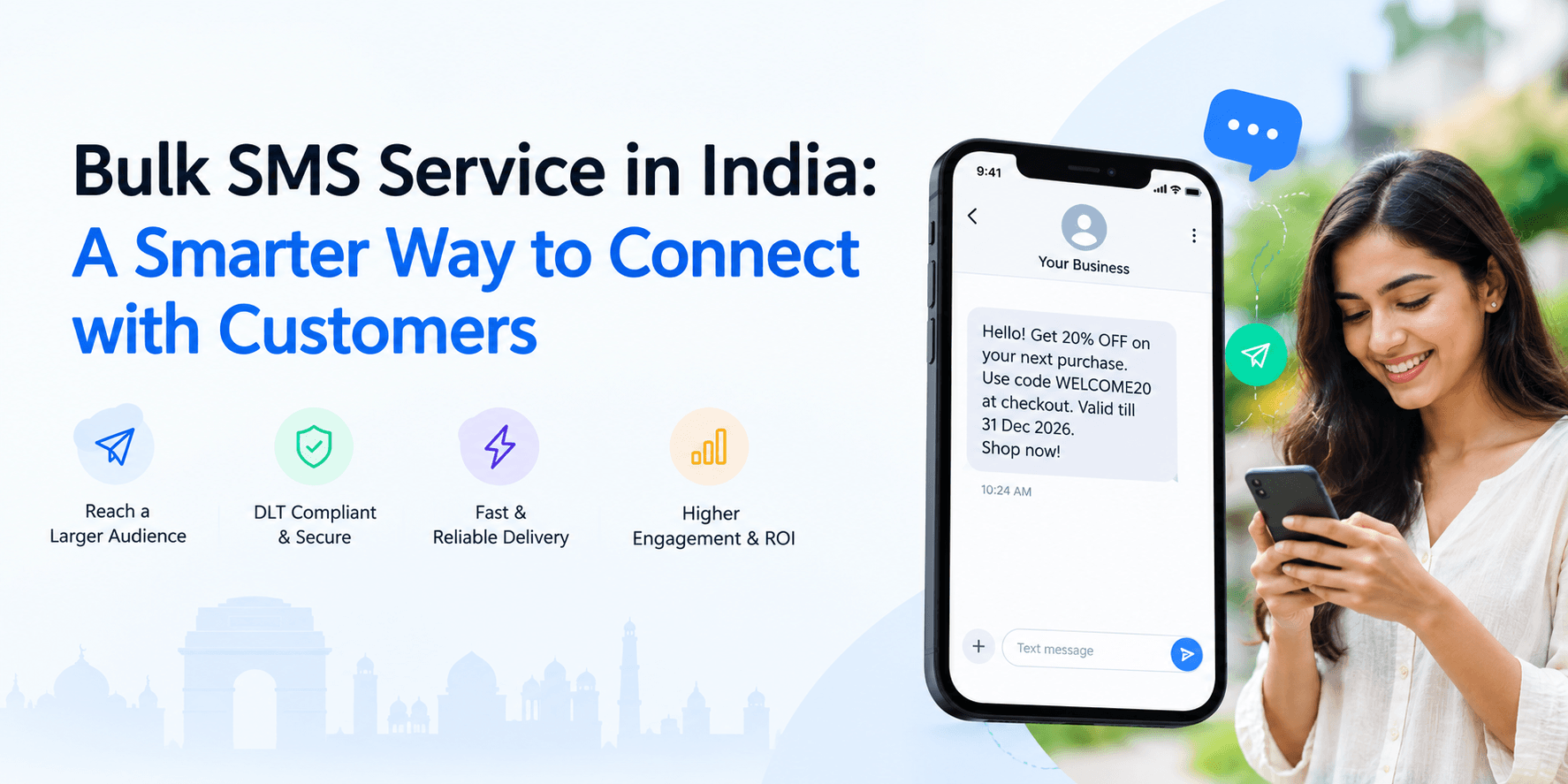
In business, timing matters. A payment reminder received at the right moment can prevent a delay. An order confirmation can reassure a customer. A well-timed promotional message can bring someone back to your store.
Despite the growth of social media and messaging apps, SMS continues to play an important role in business communication. It is direct, accessible and does not require the recipient to install an app or have an active internet connection.
For businesses looking to communicate at scale, a reliable bulk SMS service in India offers a practical way to deliver important updates, build customer engagement and run marketing campaigns.
At Midha Backers, we help businesses simplify bulk messaging with campaign support, DLT registration guidance and integrated communication solutions across SMS, WhatsApp, RCS and email.
Whether you want to automate customer notifications or promote your next offer, the right messaging strategy can make every communication more purposeful.
What Is a Bulk SMS Service?
A bulk SMS service allows businesses to send text messages to hundreds or thousands of mobile numbers through a single online platform. Instead of contacting customers individually, businesses can manage their messaging through a dashboard or connect the service directly to their existing software using an API.
For example, an e-commerce company can automatically send order confirmations and shipping updates, while a retail business can notify customers about a seasonal sale.
A bulk SMS platform typically supports:
- Sending promotional and business-related messages at scale.
- Automating OTPs, alerts and transaction notifications.
- Scheduling campaigns for specific dates and times.
- Personalising messages using customer or transaction details.
- Tracking delivery status through reports.
However, sending commercial SMS in India involves regulatory requirements. Businesses must follow applicable Telecom Regulatory Authority of India (TRAI) rules and the relevant Distributed Ledger Technology (DLT) registration, header and template requirements.
Working with an experienced bulk SMS provider can help make the setup process more manageable and reduce avoidable errors.
Why Bulk SMS Still Matters for Indian Businesses
Businesses have more communication channels than ever, but not every channel serves the same purpose. SMS remains valuable because it offers a straightforward way to reach customers without depending on an app-based ecosystem.
1. Reach customers without requiring an internet connection
Unlike internet-based messaging platforms, SMS can reach compatible mobile phones without an active internet connection. This makes it useful for businesses communicating with customers across different locations and levels of digital access.
2. Deliver time-sensitive information
OTPs, appointment confirmations, payment alerts and delivery notifications often need to reach customers promptly. SMS provides a familiar format for these short, important updates.
3. Communicate with large audiences efficiently
A bulk SMS gateway makes it possible to send the same approved message to a large audience without the effort of individual communication. Businesses can organise campaigns, manage contacts and monitor delivery from one place.
4. Keep communication simple
Customers do not need to download an application or learn a new interface to read a text message. A concise message with a clear purpose can communicate essential information quickly.
5. Support a broader marketing strategy
SMS does not have to work alone. Businesses can use it alongside WhatsApp, RCS and email to create a more coordinated communication strategy, choosing the channel that best suits each message.
Types of Bulk SMS Services
Before launching a campaign, it is important to identify the correct message category. Different message purposes can be subject to different telecom requirements, and the appropriate category should be determined under the applicable rules.
Transactional SMS
Transactional and other permitted service-related communications are used for essential updates associated with customer activity, accounts or transactions, subject to the applicable classification and regulatory conditions.
Common examples include:
- One-time passwords and authentication codes.
- Payment confirmations and account alerts.
- Order confirmations and delivery updates.
- Booking confirmations and important transaction notifications.
For businesses where timing is critical, automated messaging can reduce manual work and improve the customer experience.
Promotional SMS
Promotional SMS is designed to inform customers about products, services, offers and marketing campaigns.
Businesses commonly use promotional messaging for:
- Festive and seasonal offers.
- Discounts and limited-period promotions.
- Product launches and new store announcements.
- Event invitations and sales campaigns.
- Special offers for eligible customer segments.
Promotional campaigns must follow applicable consent, customer preference, DND and timing requirements. Businesses should also maintain clean contact lists and avoid sending unsolicited messages.
Service-Related SMS
Service-related messages help businesses maintain communication with existing customers. Depending on their purpose and applicable classification, they may include appointment reminders, subscription updates, renewal notifications, feedback requests and service announcements.
The message category should always be selected based on its actual purpose rather than simply the intended audience.
Features to Look for in a Bulk SMS Platform
Choosing a bulk SMS provider involves more than comparing per-message prices. The platform should support your communication requirements today while allowing your business to scale later.
Here are the features worth considering.
DLT registration support: Assistance with principal entity registration, sender headers and message templates can make the initial setup easier.
User-friendly dashboard: A clear interface should allow your team to upload contacts, select templates, schedule messages and manage campaigns without unnecessary complexity.
SMS API integration: An API can connect messaging to your website, mobile application, CRM, billing software or order management system. This allows messages to be triggered automatically by specific events.
Personalised messaging: Approved template variables can help businesses include relevant information such as customer names, booking references, order numbers and dates.
Delivery reporting: Reports showing delivered, failed and pending messages help businesses assess campaign performance and investigate delivery issues.
Campaign scheduling: Scheduling tools allow businesses to plan communications in advance and coordinate messages with promotions, appointments or business events.
Contact segmentation: Organising contacts into appropriate groups can make campaigns more relevant and help prevent unnecessary messages.
Multi-channel integration: Access to SMS, WhatsApp, RCS and email can help businesses manage communication through a connected strategy rather than disconnected platforms.
DLT Registration for SMS: What Businesses Need to Know
One of the most common challenges businesses face when starting commercial SMS campaigns is understanding DLT registration.
DLT is a telecom framework used to manage commercial communications and help reduce unsolicited messaging. Businesses sending regulated commercial SMS in India generally need to complete the applicable registration and approval processes before launching campaigns.
The process typically involves the following steps.
Step 1: Register your business
Register your organisation as a principal entity on the relevant telecom operator’s DLT platform. The documents required depend on the entity type and the operator’s process.
Step 2: Register your sender ID
Your sender ID, also known as a header, identifies the sender of a message. The required header type and approval process depend on the nature of your communication.
Step 3: Submit message templates
The content of regulated commercial SMS must comply with the applicable template requirements. Variable fields, such as an OTP or order number, need to be configured appropriately.
Step 4: Configure your messaging account
Once the relevant registrations and approvals are in place, your bulk SMS service can be configured with the required details. API integration and testing may also be completed at this stage.
Step 5: Test and launch your campaign
Before sending messages at scale, verify your templates, sender details, contact lists and delivery settings. Review the resulting reports to identify any issues.
A useful tip: Prepare your business documents and message drafts before starting the registration process. Clear information and correctly prepared templates can help reduce avoidable delays, although approval timelines depend on the relevant operator and the application.
At Midha Backers, we help businesses navigate the setup process and understand the practical requirements involved in launching SMS campaigns.
How Different Industries Use Bulk SMS
Bulk SMS can support several business functions, from routine notifications to customer acquisition and retention.
E-commerce and retail
Online stores and retailers can send order confirmations, dispatch updates, delivery notifications and promotional offers. SMS can also support customer re-engagement campaigns where permitted.
Education
Schools, colleges and educational institutions can communicate admission updates, fee reminders, examination schedules, timetable changes and parent notifications.
Healthcare
Clinics, hospitals and diagnostic centres can use SMS for appointment reminders, booking confirmations and report-availability notifications, subject to applicable privacy and regulatory requirements.
Banking, finance and insurance
Financial service providers can use appropriate messaging systems for authentication, payment alerts, account notifications, EMI reminders and policy renewals, in accordance with applicable regulatory requirements.
Real estate
Real estate businesses can use SMS to confirm site visits, share project updates, follow up with eligible leads and communicate event invitations.
Restaurants and hospitality
Restaurants, hotels and service businesses can send booking confirmations, reservation reminders, customer updates and relevant promotional offers.
Events and organisations
Event organisers can share registration confirmations, schedules, venue updates, entry information and other important announcements with registered participants.
The value of SMS lies in its flexibility. When the message is relevant and the timing is appropriate, it can support both everyday operations and wider customer engagement.
Bulk SMS vs WhatsApp vs RCS: Which Channel Is Right for You?
SMS, WhatsApp and RCS serve different communication needs. Choosing the right channel depends on the audience, the type of message and the experience you want to create.
| Feature | SMS | WhatsApp Business | RCS |
|---|---|---|---|
| Internet required | No | Yes | Yes |
| Broad mobile reach | Works on compatible phones with SMS service | Requires WhatsApp access | Requires a compatible device and supported service |
| Images and rich media | Generally no | Yes | Yes, where supported |
| Interactive buttons | No | Yes | Yes, where supported |
| Common use cases | OTPs, alerts, reminders and broad-reach messaging | Customer conversations, support and catalogues | Rich, branded and interactive messaging |
There is no universal winner. SMS is useful for straightforward communication, while WhatsApp supports conversations and RCS can provide richer branded experiences on compatible devices.
For many businesses, a combination of channels is more effective than relying on just one. Important notifications may be sent through SMS, while WhatsApp or RCS can support more interactive engagement.
Midha Backers helps businesses explore a suitable mix of SMS, WhatsApp, RCS and email based on their communication objectives.
Best Practices for More Effective SMS Campaigns
Sending more messages does not necessarily mean getting better results. Successful campaigns depend on relevance, timing, clarity and compliance.
Obtain the appropriate consent. Maintain appropriate records and respect customer preferences, opt-outs and applicable DND requirements.
Keep messages concise. Explain who is contacting the customer, why the message matters and what action is required.
Personalise where relevant. Use approved template variables to make messages more useful without adding unnecessary information.
Choose suitable sending times. Follow applicable timing restrictions and consider the recipient’s convenience.
Include a clear call to action. If a customer needs to make a payment, confirm an appointment or view an offer, make the next step easy to understand.
Avoid excessive messaging. Repeated, irrelevant communications can frustrate customers and reduce engagement.
Monitor delivery reports. Review failed messages, delivery patterns and campaign outcomes to identify areas for improvement.
Keep contact data updated. Remove invalid numbers and maintain well-organised contact records.
Review templates before sending. Ensure that the message content, variables, sender information and required approvals are in order.
These practices help businesses treat SMS as a communication channel that supports customer relationships rather than simply a tool for sending messages in bulk.
Why Choose Midha Backers for Bulk SMS Services?
A messaging platform is only one part of a successful communication strategy. Businesses also need help with setup, compliance, campaign planning and performance monitoring.
Midha Backers brings these requirements together through a practical, multi-channel approach.
Compliance-focused setup: Get guidance on the applicable DLT registration process, sender headers and message templates.
Multiple communication channels: Explore SMS, WhatsApp, RCS and email through a coordinated communication strategy.
Practical campaign support: Get assistance with message preparation, campaign configuration and scheduling.
Automation and integration: Explore API-based messaging for websites, applications, CRM systems and other business processes.
Clear reporting: Use delivery information to understand campaign outcomes and identify potential improvements.
Broader digital marketing expertise: Connect customer messaging with other activities, including SEO, local search visibility, website development and digital advertising.
Our approach focuses on helping businesses use communication channels with a clear purpose, whether the goal is to improve operational efficiency, keep customers informed or support marketing campaigns.
Bulk SMS Pricing in India
The cost of a bulk SMS service in India depends on several factors, including monthly message volume, message category, routing requirements, technical integration and the provider’s pricing structure.
Businesses sending large volumes may qualify for different per-message rates from those sending occasional campaigns. Additional requirements, such as API integration or setup support, may also affect the overall cost.
When comparing providers, consider more than the advertised rate. Check the applicable message category, platform features, delivery reporting, support availability and any additional charges.
At Midha Backers, you can discuss your requirements and request a quotation based on your expected messaging volume and business objectives.
Looking for a bulk SMS solution for your business? Share your estimated monthly volume, intended use cases and integration requirements to help determine a suitable plan.
Frequently Asked Questions About Bulk SMS Services
1. What is a bulk SMS service in India?
A bulk SMS service enables businesses to send text messages to large groups of mobile numbers through an online platform or API. Common uses include OTPs, alerts, reminders, order updates and promotional campaigns.
2. Is bulk SMS legal in India?
Yes. Commercial SMS can be sent in India when the sender follows applicable TRAI requirements, telecom operator procedures, registration rules and customer preference regulations.
3. Is DLT registration mandatory for bulk SMS?
Businesses sending regulated commercial SMS generally need the applicable DLT registration, approved headers and registered message templates. Exact requirements depend on the type of communication and the applicable telecom rules.
4. How long does DLT registration take?
The time required varies by telecom operator, document completeness and the approval process. Preparing the necessary documents and message templates in advance can help reduce avoidable delays.
5. Can I send promotional SMS to customers on the DND list?
Promotional messages are subject to applicable customer preference and DND restrictions. Whether a message is permitted depends on its classification and the relevant rules. Businesses should not assume that an existing customer relationship automatically permits promotional messaging.
6. Can I use my company name as the SMS sender ID?
A business may use an approved sender header, subject to the applicable registration and telecom operator requirements. The available header format depends on the message category and regulatory framework.
7. Can bulk SMS be integrated with my website or CRM?
Yes. An SMS API can integrate messaging with compatible websites, applications, CRM systems and other business software, allowing eligible notifications to be triggered automatically.
8. How can I track bulk SMS delivery?
Most bulk SMS platforms provide delivery reports that show the status of messages, including delivered, failed or pending messages, where those statuses are available.
9. Can I schedule bulk SMS campaigns?
Yes. Scheduling features allow businesses to plan campaigns for future dates and times, subject to the platform’s capabilities and applicable messaging restrictions.
10. Can SMS be combined with WhatsApp and RCS?
Yes. Businesses can use SMS alongside WhatsApp, RCS and email to support different communication needs. The most suitable combination depends on the audience, message purpose, available capabilities and budget.
Make Every Business Message Count with Midha Backers
Customer communication does not need to be complicated. With the right setup, businesses can automate routine updates, deliver important notifications and run more organised marketing campaigns.
A reliable bulk SMS service provides the foundation. The right strategy ensures that each message has a clear purpose and reaches the intended audience through an appropriate channel.
Midha Backers helps businesses bring SMS, WhatsApp, RCS and email together into a more coordinated communication strategy.
Whether you are starting with DLT registration or looking to scale your existing messaging operations, our team can help you explore the right solution.
Ready to get started?
- Request a bulk SMS demo.
- Discuss your monthly messaging requirements.
- Get a customised quotation.
- Explore integrated SMS, WhatsApp and RCS solutions.
Contact Midha Backers LLP to discuss your business communication needs.